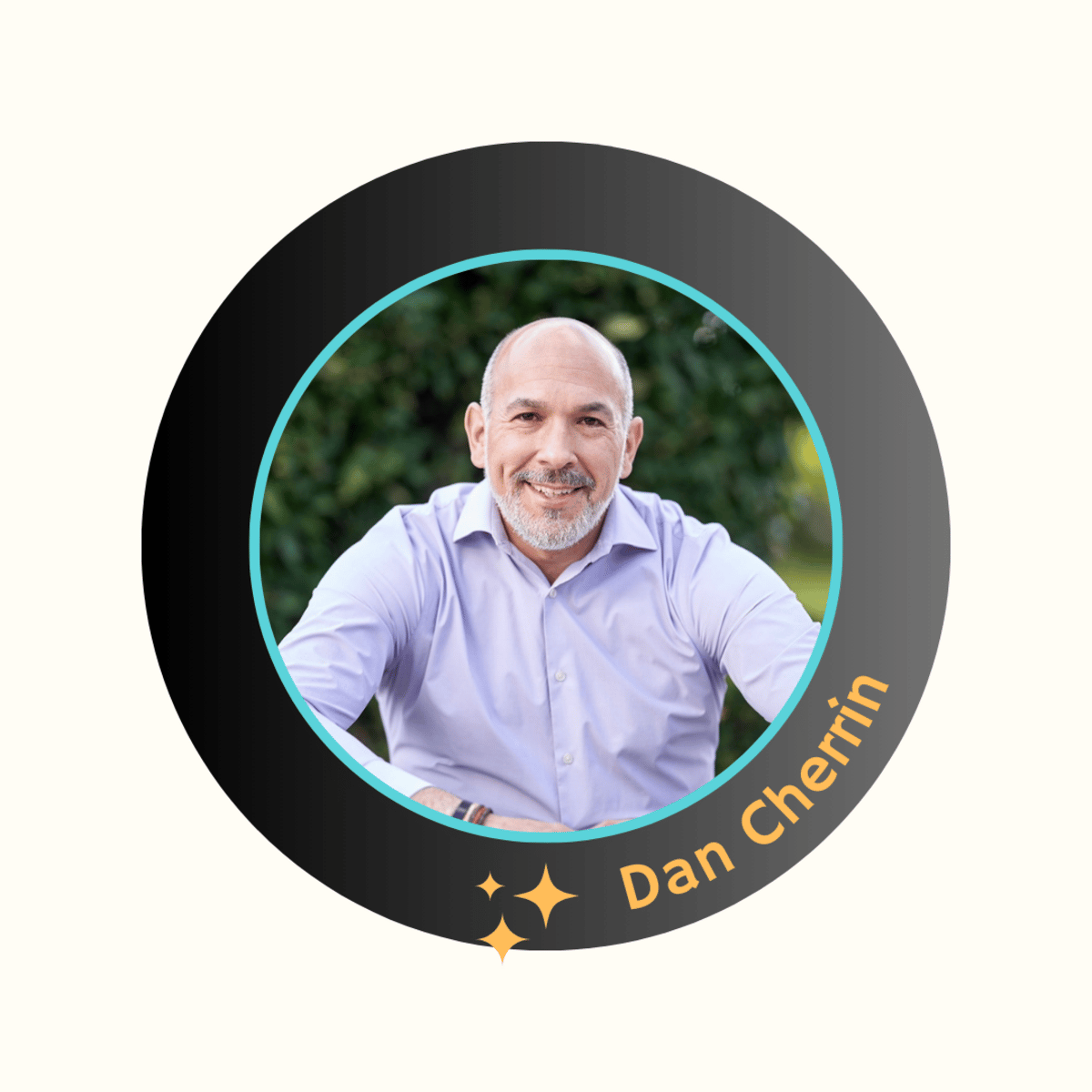
Perhaps due to the Memorial Day Holiday and Detroit Regional Chamber Policy Conference it was a quiet week. While conversations where happening in all corners of Mackinac Island, the MDHHS hit pause on key aspects of the Mental Health Framework while the legislature is moving forward in hearing testimony on readmission screening to support a transition with the Mental Health Framework. It will be a long period of transition in Lansing while mental health reform continues to be thought of as we still wait on what the State will do next. Pull Up Your Chair & Let’s Start the Conversation.
MENTAL HEALTH FRAMEWORK
The MDHHS Mental Health Framework Initiative - DELAYED
The Mental Health Framework Initiative included multiple different elements, with a goal of improvement to service delivery for mental health care services, based on the level of need of the enrollee, not just the place or type of service. One element of the Mental Health Framework Initiative included shifting coverage responsibility between Medicaid Health Plans (MHP) and Prepaid Inpatient Health Plans (PIHP) for specific mental health care services. Under these changes, MHPs would cover 3 new services (crisis residential, inpatient psychiatric, and outpatient partial hospitalization) for certain enrollees, while PIHPs covered all mental health care needs for other enrollees, determined by level of need.
These coverage responsibility changes were previously scheduled to go into effect October 1, 2026. MDHHS is temporarily delaying this specific element of the Mental Health Framework Initiative to allow more time for system-wide preparation. Under the original changes, the coverage responsibility would be driven by a benefit plan in CHAMPS (Community Health Automated Medicaid Processing System) called “BH-COVER”. Providers will still see this new benefit plan assigned to certain MHP enrollees effective October 1, 2026, but will not need to change processes based on its assignment. Other Mental Health Framework changes—including the expansion of standardized assessments for Medicaid beneficiaries seeking mental health care (see Medicaid Policy Bulletin MMP 26-01 for the State’s standardized assessment policy) and efforts to improve care coordination across systems—are continuing.
Improving coordination, access, and quality of care remains a top priority, and MDHHS will continue advancing key Mental Health Framework activities, including:
Expanding use of the State-specified mental health assessment tools, LOCUS for adults and MichiCANS Screener for children and adolescents,
Reviewing data to better understand service needs and access to mental health care for Medicaid beneficiaries,
Strengthening care coordination across MHP and PIHP systems, such as expanding referral pathways between systems and joint collaboration/coordination of services,
Continuing to clarify coverage responsibility for existing covered services to minimize provider confusion and abrasion; and
Deepening relationships between providers, Community Mental Health Service Programs (CMHSPs), PIHPs and Medicaid Health Plans to improve service delivery and the beneficiary experience across the State.
Please see MHF website for further updates and details and email [email protected] with any questions.
Mental Health Framework — In greater detail
The MHF's central mechanism uses a "BH Covers" file indicator to assign payer responsibility between health plans and PIHPs based on LOCUS/MICHIGANs scores or claims history, with the goal of resolving long-standing payment finger-pointing between health plans and PIHPs over ER boarding. Under the framework, if a member is not designated as "BH Covers," health plans become financially responsible for inpatient, crisis, and outpatient services. HB 6022 is designed to mitigate harm if the MHF moves forward. Because the Mental Health Code currently mandates CMHSPs for pre-admission screenings, if health plans are made financially responsible under the MHF, CMHSPs would hold a monopoly and could set any price for those screenings. HB 6022 would allow health plans to contract with any qualified partner for screenings, introducing competition and accountability, with implementation tied to the MHF's go-live date.
Provider Concerns on the MHF and Pre-Admission Screening Legislation
Community-based providers are concerned about the MHF's impact on their operations and the people they serve. A core structural flaw identified was the framework's static model, using a fixed "BH Covers" designation that fails to account for the dynamic nature of mental health needs, particularly in children, where a patient's acuity can shift rapidly from week to week. This static approach directly conflicts with the CCBHC "one-stop shop" model, where providers are designed to meet people wherever they are in their care continuum. Providers also flagged the MHF's added layers of authorization as creating new client-facing barriers and increased administrative burdens. The delay itself is causing its own harm, health plans cannot finalize contracts, leaving providers unable to plan staffing. Compounding that, some PIHPs are already hiring intake staff directly, effectively poaching from community-based providers.
A House Health Policy hearing on HB 6022 will be Wednesday, June 3, 2026, Time: 9:00 AM, Location: Room 519, House Office Building.
ICYMI
OCHN takes on direct crisis care in Oakland County | Opinion, Detroit News

Provider shortage: The opioid crisis continues to ravage Michigan, even with recent signs of progress, including a drop in fatal overdoses. But there’s another problem: A shortage of addiction treatment workersis hindering the state’s ability to respond to the crisis. Read the story in Bridge Magazine, COVID worsened Michigan addiction counselor shortage, Dig deeper: Read Bridge coverage of opioids in Michigan. If you don’t want to read the story, you can listen to it on WJR.
MDHHS director visits Grand Rapids Red Project to highlight innovative
opioid harm reduction efforts funded by opioid settlement dollars
Michigan among best-performing states nationally in reducing overdose deaths
LANSING, Mich. – Michigan Department of Health and Human Services (MDHHS) Director Elizabeth Hertel visited the Grand Rapids Red Project today to learn about the organization’s innovative harm reduction strategies, supported by opioid settlement fund dollars, as part of the state’s broader effort to save lives by preventing opioid overdose deaths and reducing the spread of infectious disease.
A recent modeling study by MDHHS illustrates how harm reduction programs have led to significant reductions in overdose deaths, hospitalizations and cases of hepatitis C in Michigan.
This visit highlighted how local organizations are expanding harm reduction initiatives with support from opioid settlement funding and other state investments that are designed to save lives and improve health outcomes. Provisional data projects a 47% reduction in overdose death rates in 2025 compared to the 2021 peak, indicating overdose deaths have continued to decline for the fourth consecutive year. Current projections estimate fewer than 1,800 overdose deaths annually in 2025, down from more than 3,000 deaths in 2021, placing Michigan among the nation’s best-performing states in reducing overdose deaths.
The FY 2026 budget includes more than $131 million from the Opioid Healing and Recovery Fund to support harm reduction, treatment and recovery services. More than $25 million is being used to support harm reduction agencies, diversion, law enforcement training and naloxone distribution.
MDHHS has supported the Grand Rapids Red Project’s harm reduction work addressing SUD with $4.2 million between FY 2024 and FY 2026. Michigan is slated to receive more than $1.8 billion from national opioid settlements by 2040, with half being distributed to the State of Michigan Opioid Healing and Recovery Fund and the other half being distributed directly to county, city and township governments across the state. The FY 2027 budget proposal includes more than $117.7 million.
Harm reduction agencies now operate in more than 115 sites across the state, up from five in 2017, helping to reduce infectious disease spread and prevent overdoses through the support of opioid settlement funds.
Additional information about how funds are invested is available on the opioids settlement website. For more information on harm reduction agencies and the services they provide, please visit Michigan.gov/SSP. For more information about SUD and opioid resources, visit Michigan.gov/SUD.
HHS Announces 10 New States in CCBHC Medicaid Demonstration
The U.S. Department of Health and Human Services (HHS), through Centers for Medicare and Medicaid Services (CMS) and in partnership with the Substance Abuse for Mental Health Services Administration (SAMHSA), has announced 10 new states selected for the Certified Community Behavioral Health Clinic (CCBHC) Medicaid Demonstration Program: Alaska, Colorado, Hawaii, Louisiana, Maryland, Mississippi, Montana, North Dakota, Washington, and West Virginia. This expansion reflects continued momentum behind the CCBHC model, which provides sustainable Medicaid funding to expand access to comprehensive mental health and substance use disorder services nationwide. By enabling participating states to implement a prospective payment system, the demonstration helps ensure providers can deliver coordinated, whole-person care while strengthening behavioral health systems and supporting long-term financing beyond time-limited grants. As the technical assistance provider through SAMHSA for states and clinics, the National Council for Mental Wellbeing welcomes this new cohort and looks forward to seeing the incredible outcomes they achieve as they strengthen the workforce, increase access, and enhance service delivery in their communities. |
New National Poll: Voters Overwhelmingly Support Expanding CCBHC Funding
This week, a new poll highlighting broad, cross-partisan support for expanding funding among CCBHCs received exclusive coverage in Politico. The poll showed that 75% of registered voters support increasing federal and state funding so more people can access high-quality mental health and substance use care — including strong support from swing voters and a majority of Trump voters. Key findings of the poll showed: |
95% of all voters believe it is important for people to have access to quality mental health and substance use care.
69% of all voters said they are more likely to support a candidate who backs efforts to expand CCBHC funding.
69% of all voters and 64% of swing voters said they are more likely to vote for candidates who support expanding CCBHC funding.
67% of all voters believe it is difficult to access mental health and substance use care.
The data reinforces that access to care is a shared priority, and there is strong public backing for solutions like CCBHCs. |
Kid’s mental health more important than where they get into college, Holland Sentinel
Guardrails For Private Equity: What Health Care Can Learn From The NFL, Health Affairs Today
EVENTS

If you are a nonprofit behavioral health provider in Michigan, and not a member of the MI Care Council, MI Behavioral Health & Wellness Collaborative, or the Michigan Association of Substance Addiction Providers, or just interested in collaboration, please contact [email protected], for more information on the value of membership. If you know of someone who might find this content, please share this link to the newsletter.
Disclaimer: This newsletter is intended for informational purposes only. Sources have been cited where applicable, and while some content may have been drafted with the assistance of AI, all material has been reviewed and edited by humans. We strive for accuracy, but if you believe something is incorrect or misrepresented, please reach out via direct message so we can review and correct the record if necessary.