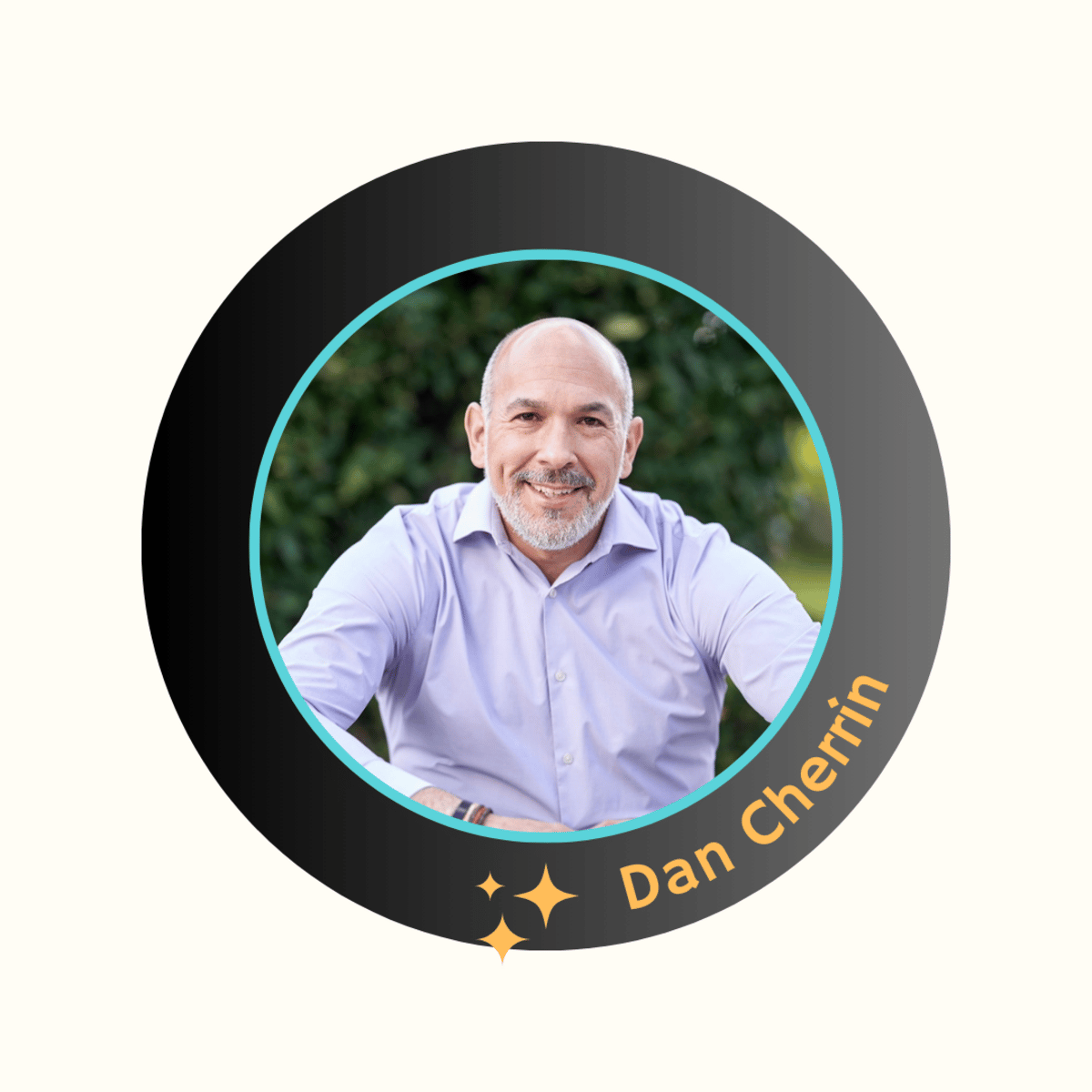
Until Decision-makers Understand How The System Works, We Won’t Be Able to Transform the System, By Daniel Cherrin
*This editorial only reflects only the views of its author
This week made one thing clear: no one is making behavioral health a priority. Not in Lansing, not in most counties, and not among the people who can make the decisions that shape the system.
It was good news that the Court of Claims ruled against the PIHPs, allowing MDHHS to move forward with its procurement process and that applicants have now submitted their proposals. But even with that progress, conflicts in the law remain, leaving the door open to future challenges. Counties are still passing resolutions opposing the state’s efforts to reform the system, and there are few voices rallying around the need for real improvement.
There’s no question that behavioral health is complicated. As one county commissioner asked me this week, after I testified against the PIHP lobby’s resolution, “Explain this to me like I’m in third grade.” (See my testimony below).
Given the questions asked it is clear that the county commissioners came to the meeting unprepared. If they read the materials shared with them in their board back they would have understood the issue on both sides. But they didn’t seem to know what the resolution even said, or what the state was actually doing.
In the end, the commission voted 4–1 in favor of a resolution and issue they didn’t understand. It was disappointing, but not surprising. Their decision reflected what we’re seeing everywhere: votes driven by relationships, not understanding.
We saw the same thing happen in Oakland County, where the County Executive and County Chair signed a letter of support, opposing the state’s efforts without seeking input from other voices or asking questions about what the redesign really means for providers or families. Their decisions were not made by informed choices, but guided by the comfort and familiarity with the people making the ask, instead of inquiry and conversation.
My take-a-way from last week, if we’re not telling our story or explaining how this system works that a “third grader” can understand, no one is with clarity or direction. Most people don’t understand the difference between a PIHP and a CMHSP, how funding flows, who delivers care, or what barriers keep people from getting help. And the truth is, they won’t unless we tell them.
It’s on us to engage. To build relationships. To educate our local leaders and legislators. To explain not just what’s broken, but how to fix it. Because every conversation, every meeting, and every vote comes down to who shows up and who they trust.
If we want a behavioral health system that works, we can’t wait for someone else to make it a priority. We have to make it one ourselves. The procurement process is moving forward. The state may select up to two PIHPs for each region. Now is the time to strengthen relationships, in Lansing, in your county, and in the communities you serve. It’s time to engage faith-based organizations, law enforcement, business leaders, and local government leaders to help them understand the impact you make and the challenges you face.
The system will continue to face its challenges and challengers. Our job is to meet that challenge with clarity, connection, and persistence, and become the stronger voice, because real change begins when we show up and speak up.
Pull Up Your Chair & Let’s Start the Conversation.
Redesign
Court of Claims Clears Path for Michigan’s Behavioral Health Overhaul
Michigan’s behavioral health overhaul is moving forward after the Court of Claims ruled against the PIHPs, affirming that MDHHS can proceed with its plan to consolidate the state’s 10 regional entities into three and transition to a competitive procurement process. Judge Christopher Yates upheld the department’s authority but cautioned that certain provisions in the 2025 RFP may conflict with the state’s Mental Health Code, particularly around the statutory role of community mental health agencies. While the ruling clears an immediate obstacle and aligns Michigan with the federal mandate for competitive contracting, it also highlights the legal and structural ambiguities still facing the system. For now, Michigan is pressing ahead in system reform, but the path forward will depend on how MDHHS, lawmakers, and providers address those unresolved statutory questions and ensure the transition strengthens, not strains, the state’s behavioral health system. See OG lawsuit and order.

Testimony as given to the Mecosta County Commission, by Daniel Cherrin
Chair Zimmerman, Commissioners, thank you for the opportunity to speak and, more importantly, for inviting providers to share our perspective before you vote on this resolution. Mecosta County is the only county in Michigan that has done that. Thank you for your leadership.
I’m Daniel Cherrin, representing the MI Care Council, a coalition of nonprofit behavioral health and substance use disorder providers serving families here in Mecosta County and across Michigan’s 83 counties. These are the social workers, psychologists, peer support specialists, and others delivering care in homes, schools, day programs, and recovery centers.
I believe we want what you want: a system that works, that spends dollars wisely, and that gets people help when they need it.
What’s Actually Happening in Mecosta County
As outlined in your board packet, Medicaid behavioral health dollars for Mecosta County flow through the Mid-State Health Network, your regional Prepaid Inpatient Health Plan (or P-I-H-P). Services are delivered locally by the Community Mental Health for Central Michigan, a Community Mental Health Services Program (or C-M-H-S-P), which also contracts with nonprofit providers that have been serving this community for decades.
In other counties, the setup looks very different, with some PIHPs also serving as the Community Mental Health Services Programs. So, depending on where you live—Mecosta, Kent, or Wayne County, you face different rules, governance structures, and standards for access and accountability. The result is not a uniform system of care but ten different systems. That inconsistency creates confusion for families, duplicative rules for providers, and multiple standards of accountability for taxpayers.
The Structural Problem: A System Built on Conflicts
The structure itself is the problem. In many counties, the same entity that authorizes care also delivers it. They control the dollars, decide who qualifies for services. They also subject providers to repeat audits, often for reviews that were just completed in another community, failing to recognize previous findings and forcing providers to spend more time on paperwork than on care.”
Even in Mecosta County, where the PIHP and CMHSP are technically separate, oversight is weak and conflicts exist. In testimony last week before the Michigan Court of Claims, Joseph Sedlock, CEO of Mid-State Health Network, conceded the dual structure “inherently blurs oversight.”
Yet providers who speak out face retaliation or lose contracts. The consequences are real. Hope Network’s Day program in Paris served adults with developmental disabilities for years but had to close after rate freezes made it unsustainable. The need didn’t go away; the system failed to support it.
Why the State Is Transforming the System Now
Michigan’s behavioral health system has been under pressure for years due to built-in conflicts of interest and a lack of uniform standards across the state. The Department of Health and Human Services chose to act now because these conflicts and inconsistencies create barriers for families, duplicate administrative costs, and complicate oversight of Medicaid dollars. Federal guidance also requires clearer separation between payors and providers in Medicaid managed care. In 2024, the Department issued new PIHP contracts requiring stronger oversight and greater accountability. Several PIHPs refused to sign those contracts and sued the Department.
Aware of the conflicts and lack of accountability, MDHHS decided to modernize the system, not privatize it, learning from past efforts, including the 2013 consolidation that reduced PIHPs in Michigan from 18 to 10. Shortly after the new RFP was issued, several PIHPs, including Mid-State, filed another lawsuit to stop the rebid. Earlier this week, the Court of Claims ruled that the PIHPs had no claim and that the state was allowed to move forward with the RFP process and to contract with those who successfully won the contract. That was part of a broader statewide strategy by the PIHP lobby: coordinated media outreach, political advocacy, a rebranded “alternative design” that preserves the current structure and county-level lobbying.
The resolution before you is part of that campaign. It mirrors the resolution circulated statewide, almost word-for-word. But not every county followed that lead. Hillsdale County voted it down, questioning why they would oppose open competition or defend layers that add cost but not care.
Sorting Fear from Fact: Privatization and Local Control
In an effort to stop reform, the PIHP lobby has leaned on two claims: “privatization” and “loss of local control.”
On privatization:
The state’s rebid allows only nonprofit and public entities to apply. All contractors must comply with Michigan’s transparency laws. This isn’t privatization, it’s about whether public dollars are reaching the people they’re meant to serve, or being absorbed by administrative waste, duplicative contracts, and layers of bureaucracy. And while PIHPs warn against privatization, some submitted bids with private health plans as partners. Proposals were due earlier this week. Many already operate like private enterprises, competing for contracts, building reserves, hiring staff away from providers, and employing lobbyists to preserve the status quo.
On local control:
The rhetoric of local control has often been used to preserve outdated administrative structures, not to improve access or outcomes. And for members of the county commission, local control is critical. The redesign doesn’t remove your statutory responsibilities under the Mental Health Code or your oversight of general-fund dollars. Local CMHs still carry out their statutory role. What changes is who writes the Medicaid check, not who delivers care. That’s why counties like Hillsdale voted against this resolution. They recognized that reducing duplication doesn’t cut care, it cuts bureaucracy. They saw open bidding as an opportunity to improve efficiency, not a threat to local control.
What I’m Not Asking You to Do—and What I Am
I’m not asking you to endorse every aspect of the state’s plan. Providers have concerns, too, especially around strong oversight, independent dispute resolution, protections from retaliation, and consistent statewide standards for rates, audits, and reporting. I am asking you to protect Mecosta County’s independence by not adopting a template resolution written to serve a statewide lobbying campaign. Take no position on the politics. Take a clear position on the principles.
If You Take Any Action, Make It About Solutions
Safeguarding the lives of Mecosta County residents should never be about politics. It should be about efficiency, fairness, and stewardship of public dollars. If you want to focus on the people, there are smarter, more targeted steps to support:
Affirm conflict-free management—separating who pays from who provides—and establish a single statewide rulebook for credentialing, billing, audits, and appeals.
Request that MDHHS realign regions so rural counties like Mecosta are grouped with similar communities.
Protect local care through guardrails: fair rates, non-solicitation of provider staff, transparent bidding, independent dispute resolution, and limits on funders expanding direct services without clear evidence of a gap.
Require transparency through quarterly public reporting on access, rates, and workforce impacts.
Reaffirm county roles under the Mental Health Code and commit to supporting community-based, nonprofit care.
These are pragmatic, common-sense steps that save money, reduce waste, and strengthen accountability.
Closing: Leadership Through Restraint
The resolution before you wasn’t written for Mecosta County; lobbyists in Lansing wrote it as a political tool to maintain the status quo. By declining to endorse this resolution, you preserve your independence, protect your credibility, and send a clear message that Mecosta County believes in accountability, transparency, and care delivered locally, without conflict, waste, or fear of retaliation. Thank you for your time and for your leadership in bringing providers into this conversation.
Here is a copy of what was provided and included in the Board Pack for Mecosta County which with all the other items was 200+ pages. I am grateful to the Community Mental Health for Central Michigan for encouraging the County Commission to reach out to me for the Provider voice.
Read further,
County board opposes PIHP procurement, seeks legal review of drain commissioner, The Pioneer (Read their Board Pack, here)
Autism Services

Detroit News
Autism funding cut leads to layoffs in navigator program, Crain’s Detroit
SUD
The deadline for eligible municipalities to participate in the $720 million National Opioid Settlement with eight drug makers has been extended to November 5. The extension will give additional time to local governments in Michigan to sign on to receive direct payments. Michigan Attorney General Dana Nessel is encouraging municipalities that have not yet joined the settlement to complete their participation forms by the deadline. Michigan governments stand to receive up to $24.5 million. Source Attorney General Dana Nessel - 10/15/2025
Last week the Senate Committee on Civil Rights, Judiciary, and Public Safety passed bipartisan legislation spearheaded by Sens. Stephanie Chang (D-Detroit), Sarah Anthony (D-Lansing), and Roger Victory (R-Hudsonville) to deliver balanced, fair, and serious solutions to the opioid public health crisis facing Michigan. Source Sen. Stephanie Chang (D-Detroit) - 10/16/2025
Behavioral Health in Schools
Michigan schools will be able to better create safe and supportive learning environments for children through practical, research-based strategies and tools with the release of the Michigan Department of Education (MDE) Guidance for a Comprehensive School Mental Health System of Supports. Source Department of Education - 10/16/2025
CCBHCs (in Kansas)
How Topeka's Astra Mental Health & Recovery merger puts clients first, Topeka Capital Journal
Mental health leaders address changes in mental health system during meeting in Hays, Hays Post (Kansas)
Telehealth
CMS Clarifies In-person Requirement for Mental Health Telehealth Services
This week the Centers for Medicare and Medicaid Services (CMS) published an updated Telehealth FAQ for Calendar Year 2025. Without congressional action to extend telehealth flexibilities, an in-person, non-telehealth visit within six months prior to their first mental health telehealth service with an annual in-person requirement for established patients is required. CMS states it does not believe this requirement applies to beneficiaries who began receiving mental health telehealth services in their homes prior to Oct. 1, 2025. That is to say, if a beneficiary began receiving services on or before Sept. 30, 2025, then they would not be required to have an in-person visit within six months and would be considered an established patient required to have at least one in-person visit every 12 months. As a reminder, statutory requirement exempts telehealth services for someone with an SUD or co-occurring diagnoses from this requirement. Source: National Council for Mental Wellbeing.
Workforce
Ontario Psychologists Clash Over How Much Training Is Enough, The New York Times
Gubernatorial Appointments
Autism Council
Brian Debano, of Laingsburg, is the licensing division director for the Michigan Department of Licensing and Regulatory Affairs. He was reappointed. His term starts Oct. 14 and ends Sept. 30, 2029.
Jenny Piatt, of Chelsea, is the division administrator for the Rehabilitation Services Business Network Division of the Michigan Department of Health and Human Services. She was reappointed. Her term starts Oct. 14 and ends Sept. 30, 2029.
Michigan Opioids Task Force
Samuel Price, of Midland, is the president and chief executive officer of Ten 16 Recovery Network. Price was reappointed. His term starts Oct. 14 and ends Oct. 1, 2029.
Darlene Owens, of Detroit, is vice president of treatment at Detroit Rescue Mission Ministries. She was reappointed. Her term starts Oct. 14 and ends Oct. 1, 2029.
*The appointments are not subject to the advice and consent of the Senate.
Events + Celebrations
Michigan Association of Substance Addiction Providers Fall Roundtable, featuring Elizabeth Hertel, October 24, 2025, 9 am, Event Registration

MIASAP
MI Behavioral Health Wellness Collaborative Community Event with Dr. Bagdasarian, State of Michigan Medical Director, and Dr. Avani Sheth, Chief Medical Officer, Wayne County Health, Human & Veterans Services, November 12, 11 AM, CNS Healthcare, Conner Street, Detroit MI 48215
CMHAM Fall Conference, October 27-28, Grand Traverse Resort, Register Here
If you are a nonprofit behavioral health provider in Michigan, and not a member of the MI Care Council, MI Behavioral Health & Wellness Collaborative, or the Michigan Association of Substance Addiction Providers, or just interested in collaboration, please contact [email protected], for more information on the value of membership. If you know of someone who might find this content, please share this link to the newsletter.
Disclaimer: This newsletter is intended for informational purposes only. Sources have been cited where applicable, and while some content may have been drafted with the assistance of AI, all material has been reviewed and edited by humans. We strive for accuracy, but if you believe something is incorrect or misrepresented, please reach out via direct message so we can review and correct the record if necessary.
