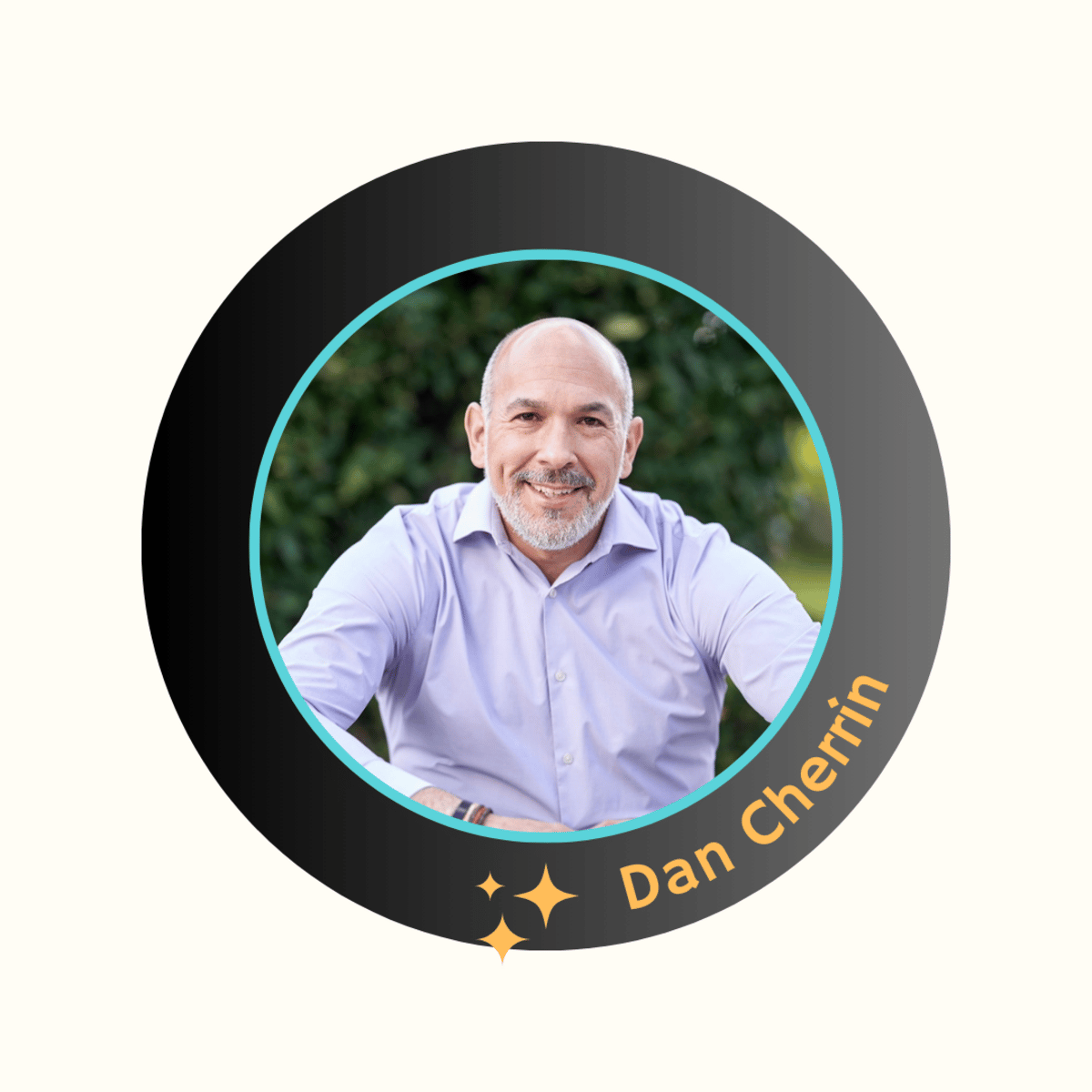
This week the only thing we know for certain is that there is still uncertainty in how behavioral health will be administered in Michigan. Some PIHPs are taking advantage of this uncertain time by letting their providers know they will be taking over targeted case management just after they took over crisis services and told law enforcement to take people to the emergency room and not their crisis care center. The Governor announced her final budget which will bring many of the issues focused during the redesign RFP back to the table and see how the budget can resolve them. We start however, with the need to Pull Up Your Chair & Let’s Start the Conversation.
Redesign
The Missing Piece in Behavioral Health Advocacy: The Human Story
We need new stories, ones that are clear, compelling, and human.Sometimes the best frameworks aren’t technical, they’re emotional. And they help us bring more people along.
The Oakland County Health Network (OCHN), an organization with no experience in providing crisis services, recently seized crisis care from Common Ground, a nonprofit who has been providing those services for decades. A few days after assuming full control of crisis services in Oakland County, they were caught off guard and OCHN sent out a news release telling law enforcement to take people to the emergency room, not their care center. They lacked the staff, resources, process and protocols.
For decades providers have worked with law enforcement and hospitals to alleviate emergency rooms and jails. Relationships have been built, processes and systems have been put in place and now we can see what happens when an organization is demands control and is ill-prepared to handle the plethora of cases they put themselves in charge of.
Emergency rooms absorb diverted patients.
Hospital administrators scramble to manage overflow.
Law enforcement officers search for safe placement options.
And families in crisis are told to try somewhere else.
When we talk about modernizing the system of care the debates centered around conflicts of interest, uniformity, accountability, transparency, privatization, and local control. The conversation centered on politics, not people.
What is missing in many of today’s debates is a disciplined effort to collect and share those human experiences alongside the data and anecdotes. Many of you if not most of you chose to work in this industry to help people. Their stories of struggle and determination, their examples of impact and resilience, are the stories we need to tell. As we tell those stories, we can highlight challenges, the conflicts, the lack of accountability or transparency and suggest solutions to overcome those challenges.
Advocacy in this environment tends to rely on technical arguments. We cite statutes, funding mechanisms, network adequacy standards, and administrative authority. Those details matter. Yet the frameworks that move public officials are often not technical, they are human.
We need to show what happens when community-based providers are supported and what happens when they are destabilized, through the eyes of the people you serve and the people work for you. PIHP boards, county commissioners, legislators, the Governor, and the media respond to evidence, but they act when they understand the human stakes. In uncertain times, the constant is the people being served. It is time to intentionally gather and elevate their stories.
Each year, providers prepare annual reports full of stories about how they are impacting lives of people in the community. Let’s share those stories and make the challenges real, so that the legislature can make it their priority.
THE BUDGET
What the Governor’s Budget Means for Behavioral Health and SUD Providers
Facing a projected $1.8 billion budget hole going into Fiscal Year 2027, Gov. Gretchen Whitmer proposed an $88.1 billion spending plan built on roughly $800 million in tax increases, $630 million in cuts, and $400 million from the rainy day fund. The administration’s stated priority is preventing Medicaid reductions, arguing that new federal eligibility requirements and cost shifts under the One Big Beautiful Bill Act (OBBBA) increase pressure on state budgets.
Medicaid stability is the organizing goal
Budget Director Jen Flood told lawmakers the Governor will not “throw people off their care,” and the budget was crafted to keep Medicaid afloat amid what was described as an otherwise generally flat budget. DHHS Director Elizabeth Hertel said every payer is in a difficult position and that without the proposed revenue increases, “people would feel it.” Senate Appropriations Chair Sarah Anthony (D-Lansing) framed the issue as a result of federal decisions shifting costs to states and families. House Speaker Matt Hall (R-Richland Township) rejected tax increases and argued the state is “getting all of our Medicaid funding,” urging a focus on cutting “waste, fraud and abuse.” Other Republicans criticized new spending and staffing growth at DHHS.
How the budget proposes to pay for Medicaid and DHHS costs
Whitmer’s plan includes $780.4 million to stabilize Medicaid funding, supported by a set of targeted tax increases, including increase taxes on tobacco, vape and electronic cigrattes. A new internet gaming tax (going to the Medicaid Benefits Trust Fund), a per-wager sports betting tax, and other tax increase.
Lawmakers also pressed the administration on proposed “efficiencies,” with House Appropriations Chair Ann Bollin (R-Brighton) questioning where those savings are coming from. Flood referenced Medicaid, forensic lab consolidation, and rural development function consolidation, but some legislators said the details were still difficult to see.
Federal compliance and administrative expansion
DHHS estimates it will cost $97 million to implement the OBBBA. Starting in FY27, the state is also being asked to cover 75% of SNAP benefits instead of 50%, an additional $97 million. To oversee Medicaid compliance and administer the new requirements, DHHS projects the need for 589 additional positions (assistance payment workers, inspectors, analysts, supervisors, and administrative assistants), costing $80.3 million. For providers, this portion of the budget is a signal that eligibility verification, administrative processes, and oversight capacity are likely to intensify, even if the delivery structure remains the same.
Items providers should watch closely
The proposal includes several DHHS initiatives that intersect with behavioral health capacity and operations:
Funding intended to get a new psychiatric hospital up and running to serve more people
Direct care worker wage increases: DHHS estimates a $3.40/hour raise, costing $258.4 million this year, plus $1.27/hour more starting next year
Providers should monitor the budget hearings and look to testify on its impact. As the largest part of the budget, there will be additional scrutiny around,
Coverage continuity for people receiving services
Rate and workforce pressures tied to direct care wages
Administrative demands tied to federal compliance and eligibility verification
State capacity investments (including the psychiatric hospital)
The FY26 budget boilerplate includes a strict prohibition on CCBHC expansion. Barring changes made through the legislative process, no expansions can occur in FY26. The Governor’s FY27 Executive Budget recommendation does not include lifting this language or continuing it into FY27. The budget does have a line item for CCBHC Base Services Correction. The focus now turns to the appropriations hearings in both the House and the Senate and your chance to add boilerplate language to help direct spending in the next Fiscal Year, with a new Governor in charge.
To review the budget and supporting documents, link here. And here is the MDHHS news release summarizing their budget priorities.
Legislative Update
House Committee on Health Policy, Rep. Curtis VanderWall, Chair
Wednesday, February 18, 2026
HB 5302 - Health: substance use disorder prevention; competitive grant program to provide grants for recovery community organizations; modify.
ICYMI
OCHNs Next Move Reinforces Conflicts of Interest in MIchigan’s Behavioral Health System
The Mental Health Association in Michigan has raised serious concerns following the January 29, 2026 closure of Common Ground’s Resource and Crisis Center in Pontiac, which for more than fifty years served as a primary destination for individuals experiencing psychiatric emergencies in Oakland County. After Common Ground terminated its contract early due to a lack of funding, Oakland Community Health Network (OCHN) assumed responsibility for adult crisis services and notified law enforcement to divert individuals in crisis to local emergency departments rather than the longstanding crisis center. While OCHN stated that services remain operational and accessible, MHAM warned that the abrupt transition could create barriers to timely, appropriate care, increase strain on hospital emergency rooms and law enforcement, and disrupt a system that families and first responders have relied on for decades. The organization is urging OCHN to work collaboratively with community partners to ensure uninterrupted, high-quality crisis services and is calling on the Michigan Department of Health and Human Services to ensure compliance with statutory obligations under the Michigan Mental Health Code, while pledging to closely monitor how the transition affects residents in crisis.
OCHN is not stopping there in trying to shake up their provider network. At an OCHN provider meeting last week, OCHN leaders announced it will be providing Targeted case management (T1017) themselves. When questioned about conflict of interest and becoming a service provider, OCHN responded that “firewalls will be in place.”
Other PIHPs have taken over children’s crisis screening. With more seizers expected until guardrails are put into place or the state issues a directive to prevent further fragmentation of their provider network.
SUD
OTHER NEWS
State of the States
Every year, governors across the country lay out their priorities in their State of the State addresses. Inseperable is paying close attention to what the governors of both parties are saying, “because words signal priorities, and priorities shape policy. Governors are addressing access to care in different ways across states. According to a 2/10/26 email to its members, Inseperable shared that Gov. Henry McMaster of South Carolina noted the need to address treatment gaps, and Gov. Janet Mills of Maine highlighted the success of school-based services.

According to Inseperable, many governors are also zeroing in on a common concern: the role of technology and social media in the youth mental health crisis. What will Governor Whitmer say? Tune in to her final State of the State, February 25, 2026. And if you want to track policies in various states, the National Academy for State health Policy is tracking behavioral health policy in each state ,found here.

Nonprofits
Michigan’s Nonprofits: The Safety Net That Never Stops
Nonprofits aren’t a seasonal service or a short-term fix. They are Michigan’s safety net. When crisis hits, nonprofits are the first to step up. Most of those nonprofits are not full funded by the PIHPs for the services they provide. Many are underfunded and rely on outside donations. The MIchigan Nonprofit Association recognizes that and crafted a video highlighting the work nonprofits across Michigan are doing every single day.
Mental Health Diversion Council
Dr. Lesly Hendershot, of Clinton Township, is the section chief of psychology for Corewell Health East. Additionally, Hendershot is the clinical manager of treatment programs and evaluation services for the Corewell Children’s Hospital Ted Lindsay HOPE Center and Center for Human Development and is responsible for oversight of pediatric psychotherapy services. Hendershot holds a Bachelor of Science in biology and psychology from Mount Union University, and a Master of Arts and Doctorate in clinical psychology from Xavier University. Dr. Lesly Hendershot is appointed to represent juvenile mental health practitioners for a term commencing February 11, 2026, and expiring January 30, 2030. Hendershot succeeds Carlynn Nichols, who has resigned.
Ronald Stoneman, of Pentwater, is the superintendent of Manistee Area Public Schools. Previously, Stoneman was the superintendent of Redford Union School District. Stoneman holds a Bachelor of Science in physical education and history and a Master of Educational Leadership from Grand Valley State University. Ronald Stoneman is appointed to represent school systems for a term commencing February 11, 2026, and expiring January 30, 2030. Stoneman succeeds Johanna Clark, whose term has expired.
The Mental Health Diversion Council was created in the Michigan Department of Community Health to advise and assist in the implementation of the Diversion Action Plan and provide recommendations for statutory, contractual or procedural changes to improve diversion. These appointments are not subject to the advice and consent of the Senate.
If you are a nonprofit behavioral health provider in Michigan, and not a member of the MI Care Council, MI Behavioral Health & Wellness Collaborative, or the Michigan Association of Substance Addiction Providers, or just interested in collaboration, please contact [email protected], for more information on the value of membership. If you know of someone who might find this content, please share this link to the newsletter.
Disclaimer: This newsletter is intended for informational purposes only. Sources have been cited where applicable, and while some content may have been drafted with the assistance of AI, all material has been reviewed and edited by humans. We strive for accuracy, but if you believe something is incorrect or misrepresented, please reach out via direct message so we can review and correct the record if necessary.
